
Self-Hosted Enterprise ERP Software: Unifying Inventory, Invoicing, and Supply Chain
Short answer
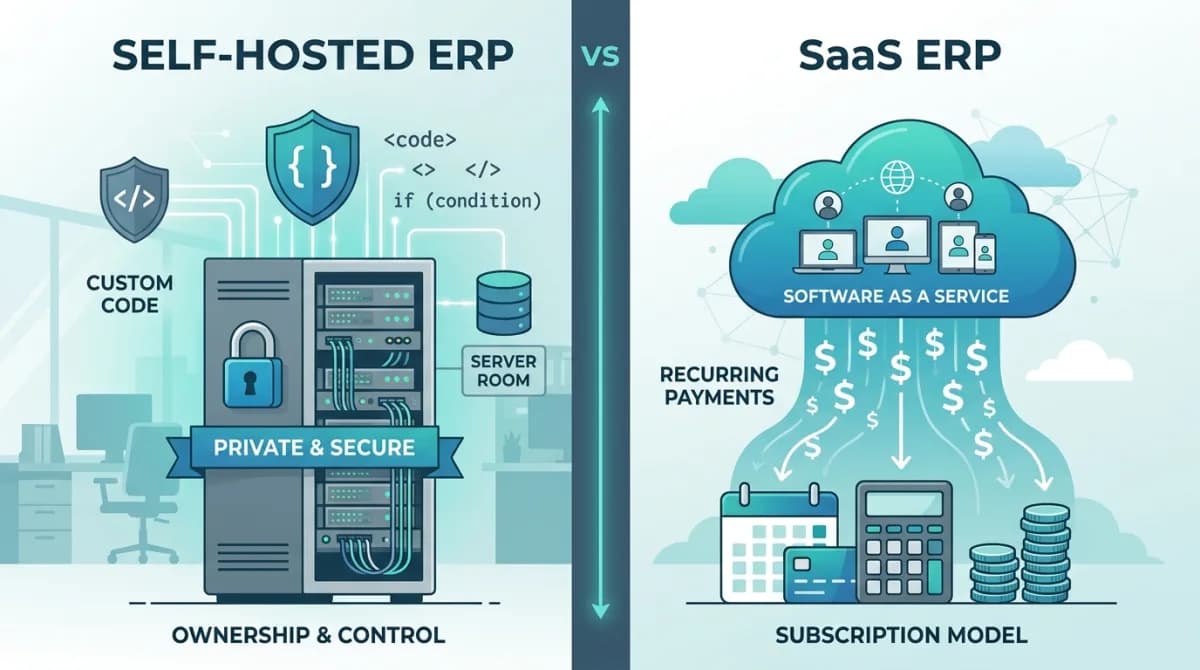
Self-hosted enterprise ERP software unifies procurement purchase orders, multi-warehouse stock allocations, sales quotations, and accounting ledgers into one central data model. Deploying the system on dedicated private cloud servers eliminates recurring per-seat user license fees, ensures strict corporate data sovereignty, and provides mid-market manufacturing and trading companies with direct database access for custom business reporting and workflow tailoring.
Software discussed: Dino ERP · Try the live demo
Overcoming Fragmented Enterprise Business Systems
Mid-market manufacturing, import-export, and wholesale companies frequently struggle with disconnected operational tools. Sales teams manage leads in isolated CRM software, warehouse staff track inventory on disparate spreadsheets, and accounting departments re-enter invoice figures manually into desktop accounting programs.
This fragmented software ecosystem leads to invoicing discrepancies, unfulfilled customer orders, and delayed executive financial reporting. Mainstream cloud ERP suites promise integration but impose prohibitive annual subscriptions and per-seat license fees that strain corporate budgets.
Implementing a self-hosted business management ERP resolves these bottlenecks. Enterprises operate a unified system on private infrastructure, maintain full data custody, and avoid recurring vendor per-user charges.
Integrated Modules in Dino ERP
Dino ERP connects all core business functions within a cohesive database architecture:
- Procurement & Supplier Management: Vendor price lists, purchase requisition approvals, goods receipt notes (GRN), and vendor bills.
- Multi-Warehouse Inventory Control: Automated stock allocation, bin location mapping, reorder warnings, and inventory valuation accounting.
- Sales & Order Management: Quotation generation, multi-tier discount approval workflows, sales order tracking, and customer billing.
- Financial Accounting & Tax Compliance: General ledger chart of accounts, accounts payable and receivable aging, bank reconciliations, and tax reporting.
3-Year Cost Comparison: Enterprise Cloud ERP vs. Self-Hosted Dino ERP
| Expense Vector | Commercial Cloud ERP SaaS | Dino ERP (Self-Hosted) |
|---|---|---|
| User Seat Licensing | $80 - $200 / user / month | Single commercial deployment license |
| Data Storage Fees | Tiered pricing based on database size | Standard private VPS storage pricing |
| Custom Reporting & API Access | Restricted query limits or premium modules | Direct MySQL database query access |
| Monthly Server Infrastructure | Bundled into expensive subscription | $40 - $90 / month on private cloud VPS |
| 3-Year Total Investment (30 Users) | $86,000 - $216,000+ | Predictable baseline maintenance post-launch |
Technical Architecture and Data Sovereignty
Dino ERP is built in TypeScript: an Express 5 API with Prisma, MySQL 8, Redis and BullMQ background jobs behind a Next.js 15 web application, shipped as one Docker Compose stack. Role-based access control (RBAC) ensures fine-grained authorization, restricting sensitive financial data to authorized executive profiles.
Hosting the entire ERP application on an organization's private virtual private server ensures that proprietary customer contracts, margins, and supply chain data never reside on shared multi-tenant public cloud services. Complete database migration scripts and deployment documentation are supplied at handover.
Frequently Asked Questions
Frequently Asked Questions
Can Dino ERP handle multi-currency transactions and localized tax formats?
Yes. The ERP supports transactions in multiple currencies with exchange rate management, as well as localized VAT, GST, and sales tax rules.
Does the system support role-based permission controls for staff members?
Yes. Administrators can configure custom roles that restrict view, edit, and approval privileges across specific departments and financial reports.
Can existing financial and customer data be imported into Dino ERP?
Yes. Standardized CSV and Excel migration templates facilitate smooth data onboarding for customer lists, chart of accounts, and product catalogs.
Software in this article
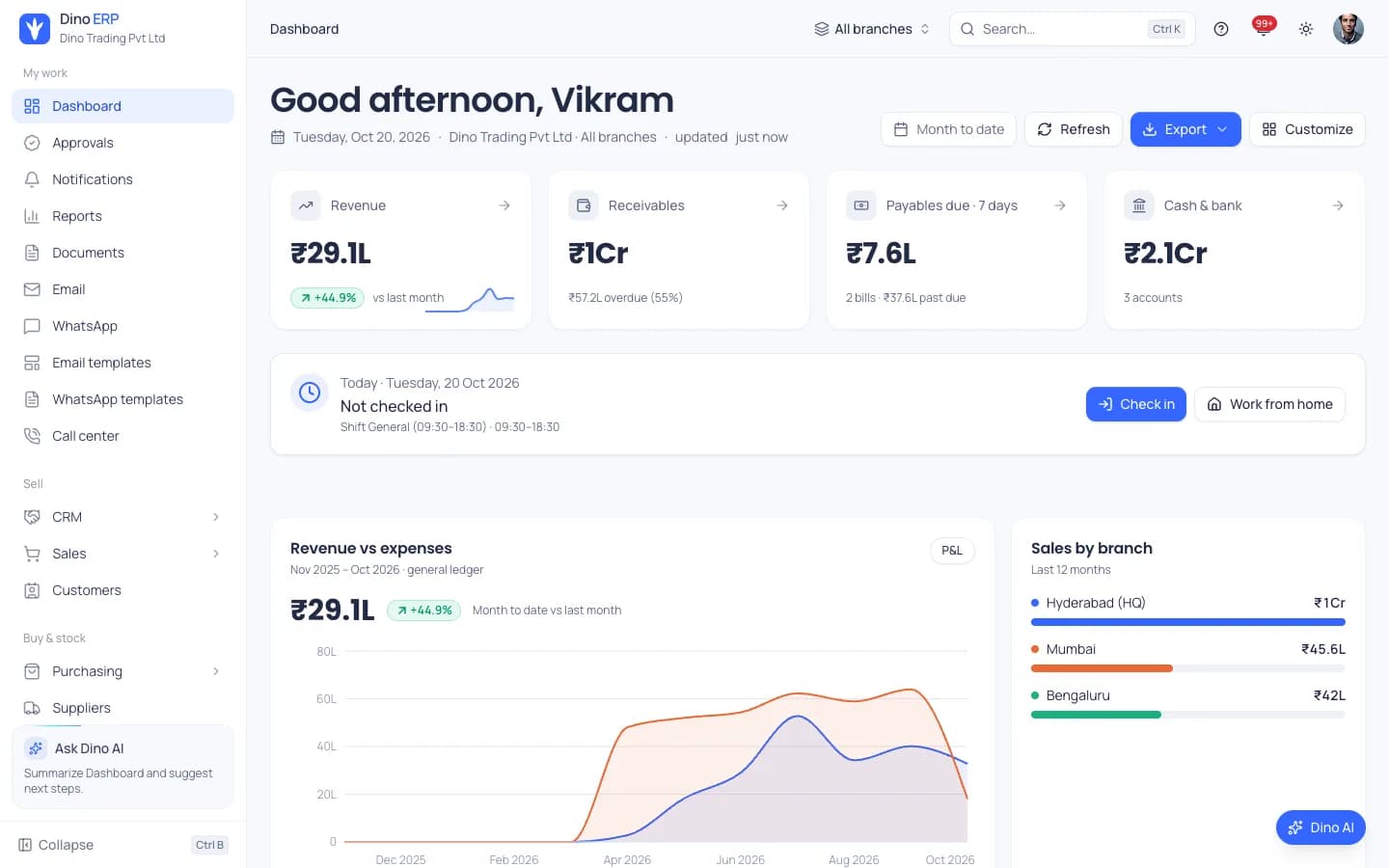
Dino ERP
Dino ERP is an AI-powered, self-hosted, white-label ERP with 27 product areas across seven suites, including CRM, sales, purchasing, inventory and WMS, finance, country tax setup, HR and payroll, projects, manufacturing, quality, assets, helpdesk, POS, e-commerce, subscriptions, rental and portals, plus Dino AI for questions, document capture and forecasts.
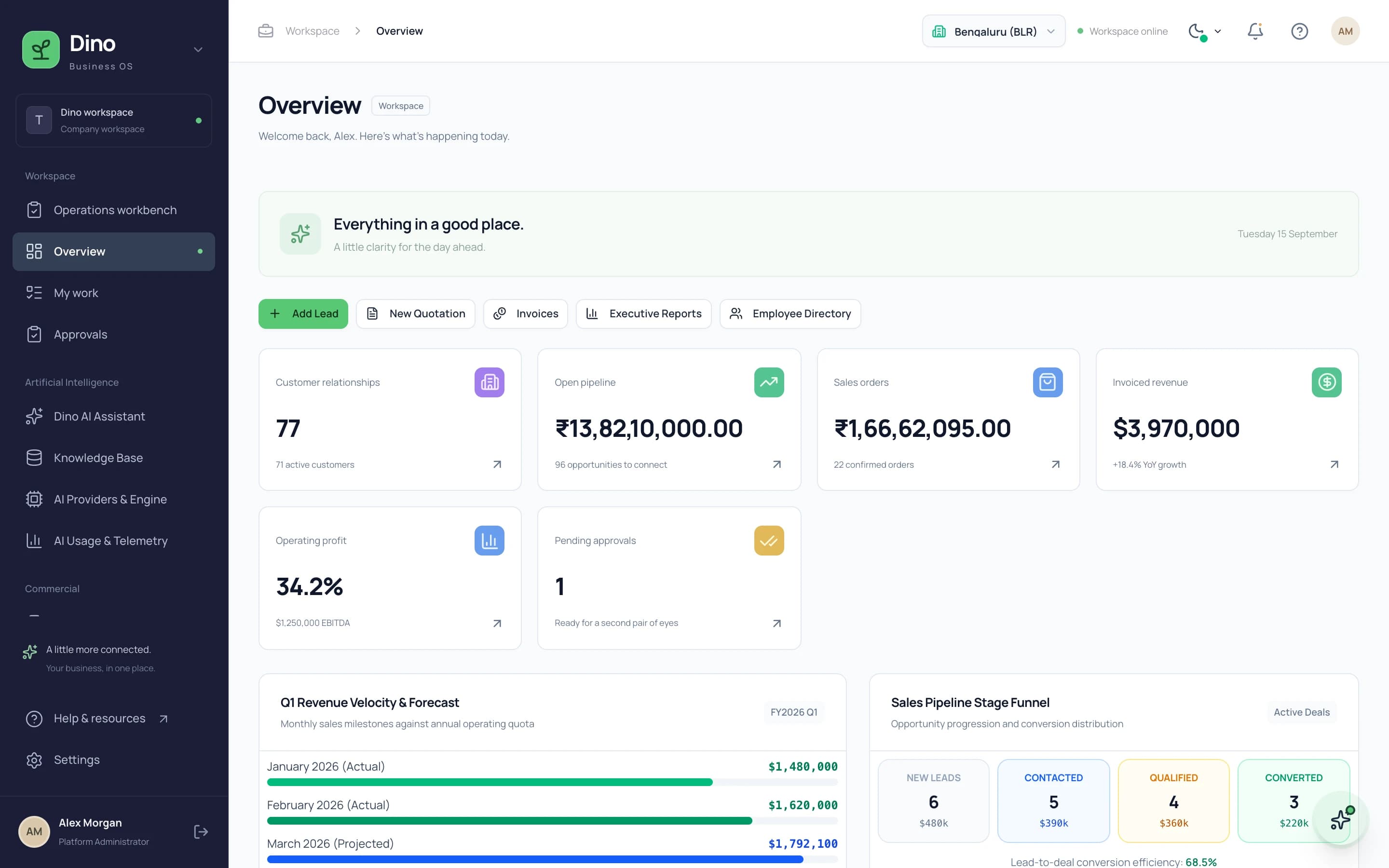
Dino Business OS
Dino Business OS is AI-powered business operations software that connects CRM, sales, procurement, inventory, projects, HR, payroll, service, assets, documents and finance in one permission-controlled workspace with a built-in LangGraph multi-agent AI assistant.
Explore Next
- Learn about our saas development
Want Dino ERP Under Your Brand?
Rebrand Dino ERP with your logo and domain, or have it customized for your workflow. All quotes are customized and private.
Related Articles
White-Label Matrimony & Matchmaking App Development: Architecture and Monetization
Explore how to build and launch a community matchmaking platform with verified profiles, preference filtering, secure direct messaging, and premium memberships.
Subscription Milk & Daily Delivery Software: Route Dispatch and Wallet Billing
Learn how self-hosted subscription delivery software automates daily morning dispatch routes, prepaid customer wallets, and dynamic recurring delivery schedules.