
Self-Hosted Software vs Monthly Cloud SaaS: Why Businesses are Reclaiming Data Sovereignty
Short answer
Self-hosted software deployed on private VPS infrastructure gives businesses complete data sovereignty, zero forced monthly per-seat licensing fees, and direct access to source code and database tables. Unlike proprietary cloud SaaS platforms where business data is locked inside vendor silos subject to recurring subscription inflation, self-hosting provides permanent operational independence.
Software discussed: Dino Sales CRM · Try the live demo
Over the past decade, Software-as-a-Service (SaaS) promised lower upfront setup friction. However, as businesses scale, the hidden costs of rental SaaS become burdensome: compounding per-user monthly invoices, mandatory feature paywalls, unexpected pricing tier hikes, and complete lack of source-code access.
The Strategic Advantages of Self-Hosting on Private VPS
Deploying software on your own virtual private server unlocks four strategic commercial benefits:
Self-hosting also changes what happens when the relationship ends. A subscription that lapses takes the application and usually the interface to your data with it, leaving an export file and a migration project. Software you own keeps running exactly as it did, which means a vendor dispute, a price rise or a shutdown becomes an inconvenience rather than an operational emergency.
- Data Sovereignty: Your customer database, financial records, and operational logs reside exclusively on your cloud server (AWS, DigitalOcean, or Hostinger) under your compliance governance.
- Zero Monthly Software Subscription Fees: You pay a one-time quotation for the software license and only pay your own hosting provider for raw compute resources.
- Direct Database & API Access: Query your PostgreSQL or MySQL database directly, build custom automated reporting scripts, and execute deep BI integrations without vendor API limits.
- Unrestricted Source Code Customization: Adapt frontend interfaces, business logic, and checkout flows to match unique operational requirements.
Commercial Comparison: Self-Hosted Software vs Multi-Seat Rental SaaS
| Dimension | TechDino Self-Hosted Model | Standard Multi-Seat Cloud SaaS |
|---|---|---|
| 3-Year Total Software Cost | One-time license + Low server cost | Compounding monthly per-seat subscription invoices |
| Data Export & Migration | Instant pg_dump / SQL backup anytime | Proprietary formats, restricted exports, or high exit fees |
| Custom Feature Expansion | Full freedom to modify source code | Impossible (Locked proprietary black-box system) |
| White-Label Branding | 100% custom branding, domain & emails | Vendor watermark or high 'Enterprise' tier upcharge |
Explore our full suite of Self-Hosted Software Solutions and review our commercial terms on the Source Code & Licensing Guide.
Security and Backup Sovereignty
When you self-host, you control the encryption keys, firewall rules, and automated off-site snapshot backups. You are never exposed to cross-tenant data leaks or arbitrary vendor service shutdowns, ensuring your core business operational tools remain available indefinitely.
Sovereignty only counts if the restore is tested. Owning the server means owning the recovery, and a backup nobody has ever restored is a hope rather than a control. Schedule a quarterly drill that brings the database up on a scratch instance and checks a recent record, because the failure you are insuring against is the one where the primary disk is already gone.
Total Cost of Ownership Over Three Years
A mid-sized company with 25 employees using a conventional rental SaaS at $40/user/month spends over $36,000 across three years in software rental alone. With a self-hosted single-license model on a $20/month VPS, total three-year expenditure is dramatically lower while delivering full source-code rights.
Include the costs self-hosting genuinely adds, or the comparison is not honest. A VPS, backups, SSL, occasional dependency updates and someone responsible for applying security patches are real line items, typically a few thousand rupees a month plus a few hours a quarter. The case for ownership rests on those costs staying flat while seat-based subscriptions grow with the team.
Self-hosted equivalents of the subscriptions businesses most often replace, each with a live demo: Dino Sales CRM for sales, Dino HRMS for HR and payroll, DinoFlow for projects and tasks, and Dino ERP for finance, purchasing and stock.
Frequently Asked Questions
Reclaim Your Software Independence
Break free from compounding monthly SaaS subscriptions. Explore our Product Catalogue to find ready-made, self-hosted software built for your industry vertical.
Every product in the TechDino catalogue is sold on the self-hosted side of this comparison: complete source code, your own server, and no mandatory recurring platform fee.
Frequently Asked Questions
What server specifications are required to run self-hosted applications?
Most TechDino applications run smoothly on standard VPS instances (e.g. 2 vCPU, 4GB RAM, Ubuntu Linux) starting at very affordable monthly hosting rates on AWS, DigitalOcean, or Hostinger.
Does TechDino assist with initial server setup and deployment?
Yes. Standard branded deployments include full VPS configuration, Docker container setup, SSL certification, database migration, and operational handover.
Can my internal developer team maintain and enhance the codebase later?
Yes. All code is delivered in clean, standard modern technologies (Next.js, TypeScript, Node.js, Prisma, Flutter) with clear directory structures and documentation.
What ongoing technical support is provided after launch?
TechDino provides 3 months of included post-launch bug fixing and technical support, with optional ongoing server maintenance agreements available.
Software in this article
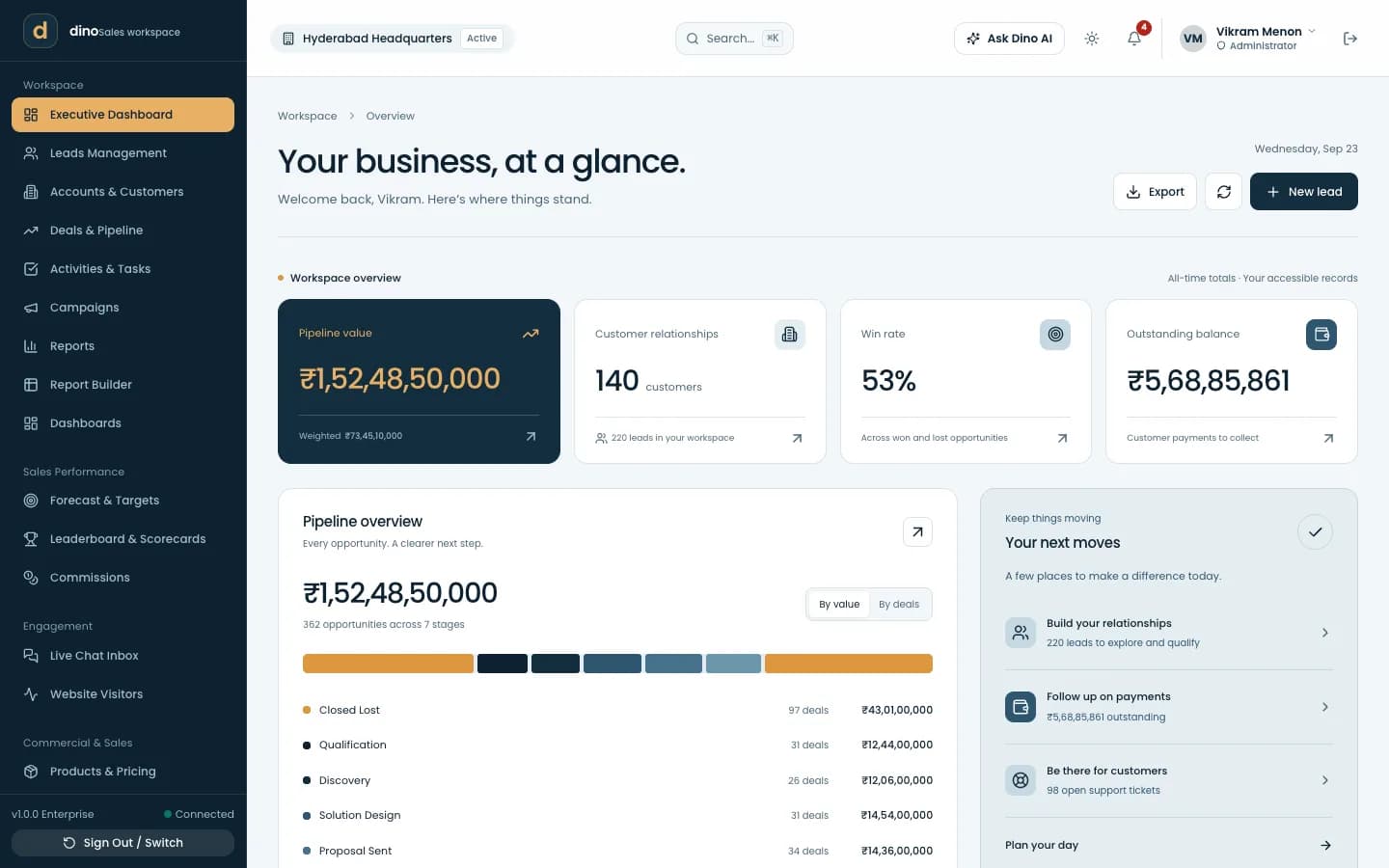
Dino Sales CRM
Dino Sales CRM is an AI-powered, white-label sales CRM with lead scoring, a configurable deal pipeline, quotations and approvals, invoices and aging, forecasting, commissions, support tickets and a Dino AI assistant grounded in your own records.
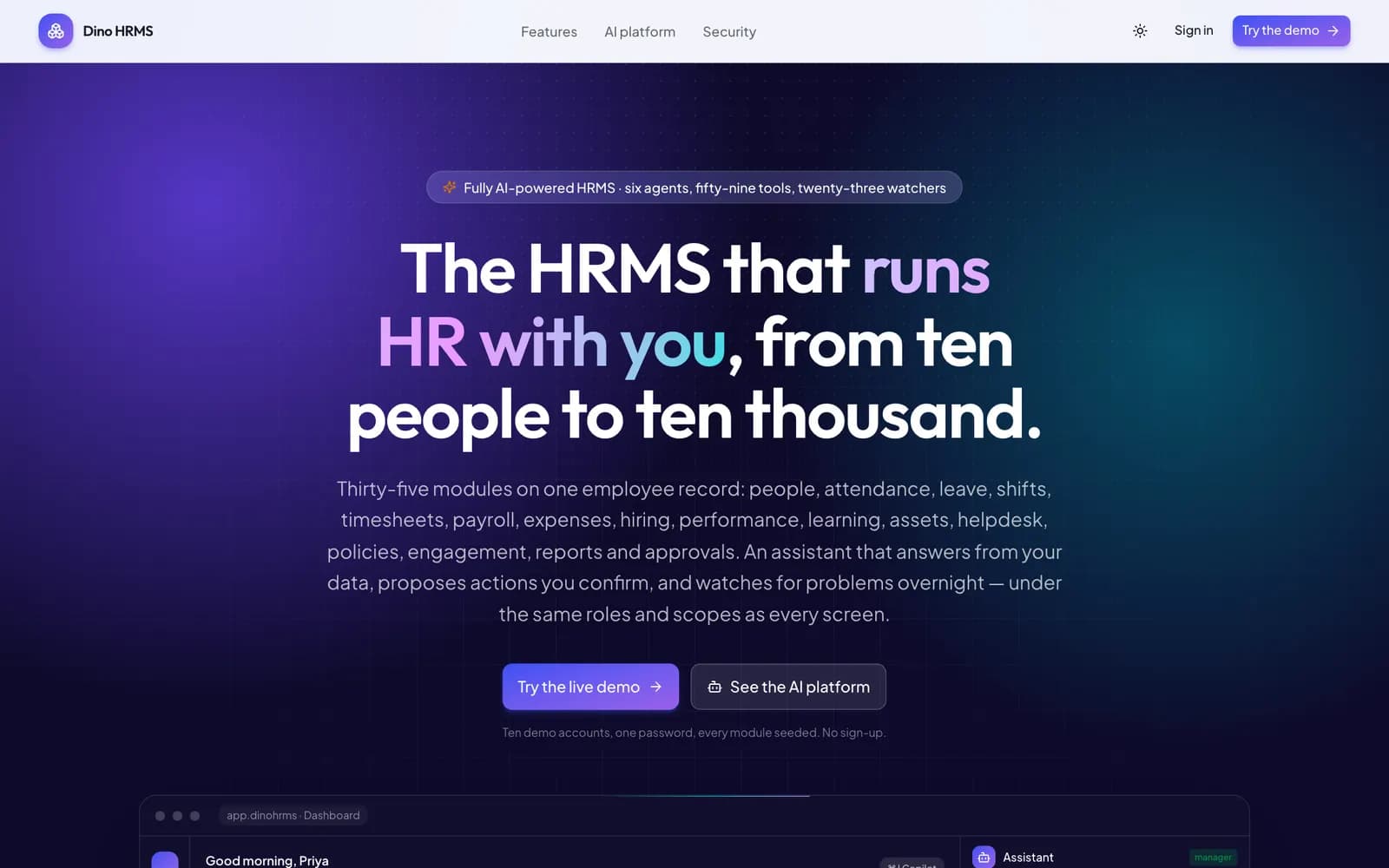
Dino HRMS
AI-powered white-label HRMS and payroll platform with 35 modules on one employee record — people, attendance, leave, shifts, timesheets, payroll, expenses, recruitment, performance, learning, assets, helpdesk, policies, engagement, workflows, reports and audit — plus six assistant agents and twenty-three automated watchers.
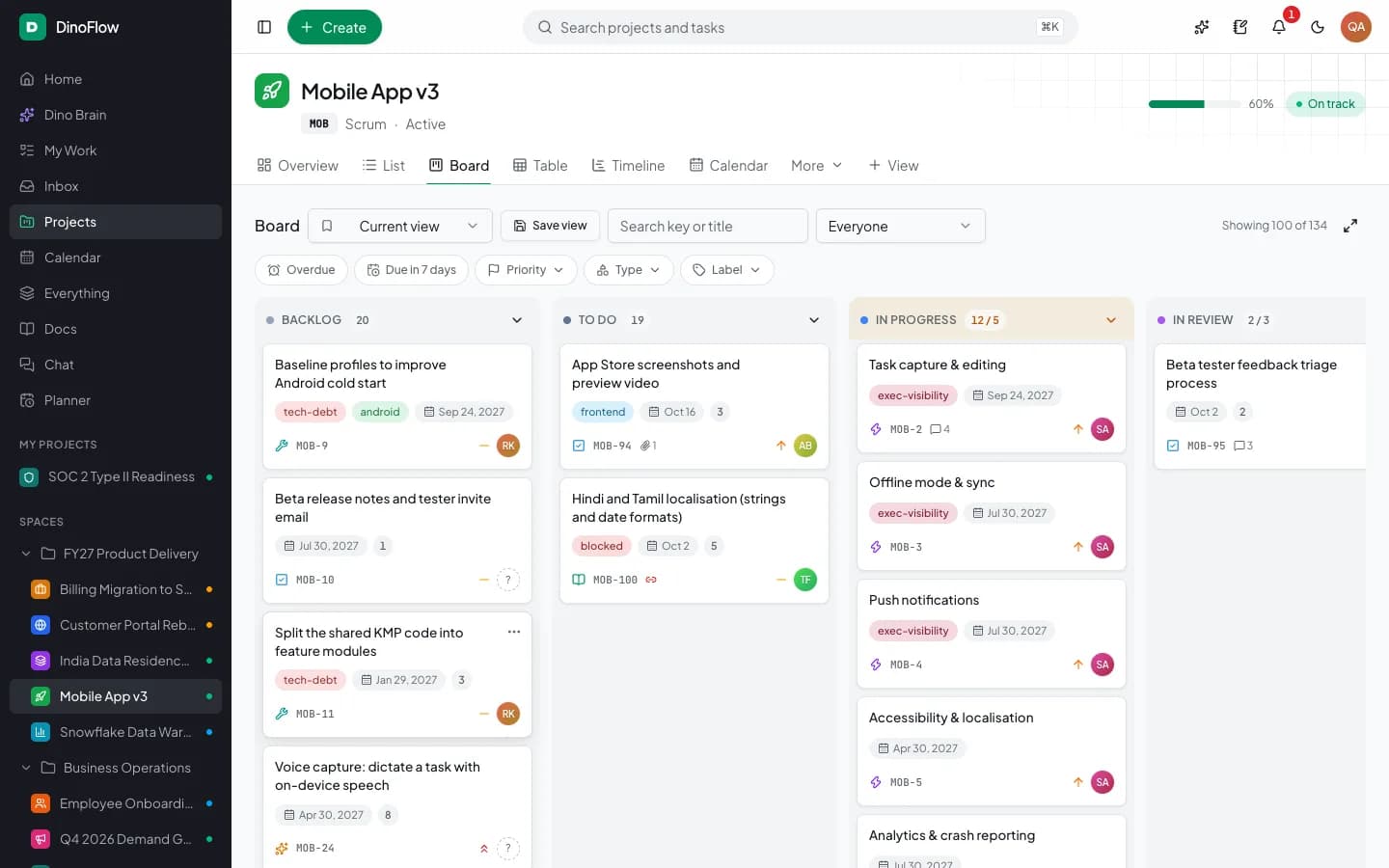
DinoFlow
DinoFlow is an AI-powered, self-hosted, white-label work management platform with list, board, table, timeline and calendar views, sprints, docs and sheets, chat, goals and OKRs, time tracking, automations and Dino Brain, a supervisor with five specialist AI agents that act with the permissions of the person asking.
Want Dino Sales CRM Under Your Brand?
Rebrand Dino Sales CRM with your logo and domain, or have it customized for your workflow. All quotes are customized and private.
Related Articles
Multi-Tenant School Management SaaS Architecture: How to Build and Scale an EdTech Platform
Explore the technical architecture, tenant data isolation models, billing engines, and deployment strategies for launching a multi-school management SaaS platform.
Ready-Made Software vs SaaS Subscriptions: Which Fits Your Business?
A licence you buy once versus a subscription you pay forever. The right answer depends on how long you will run the system and how much control you need over data and cost.